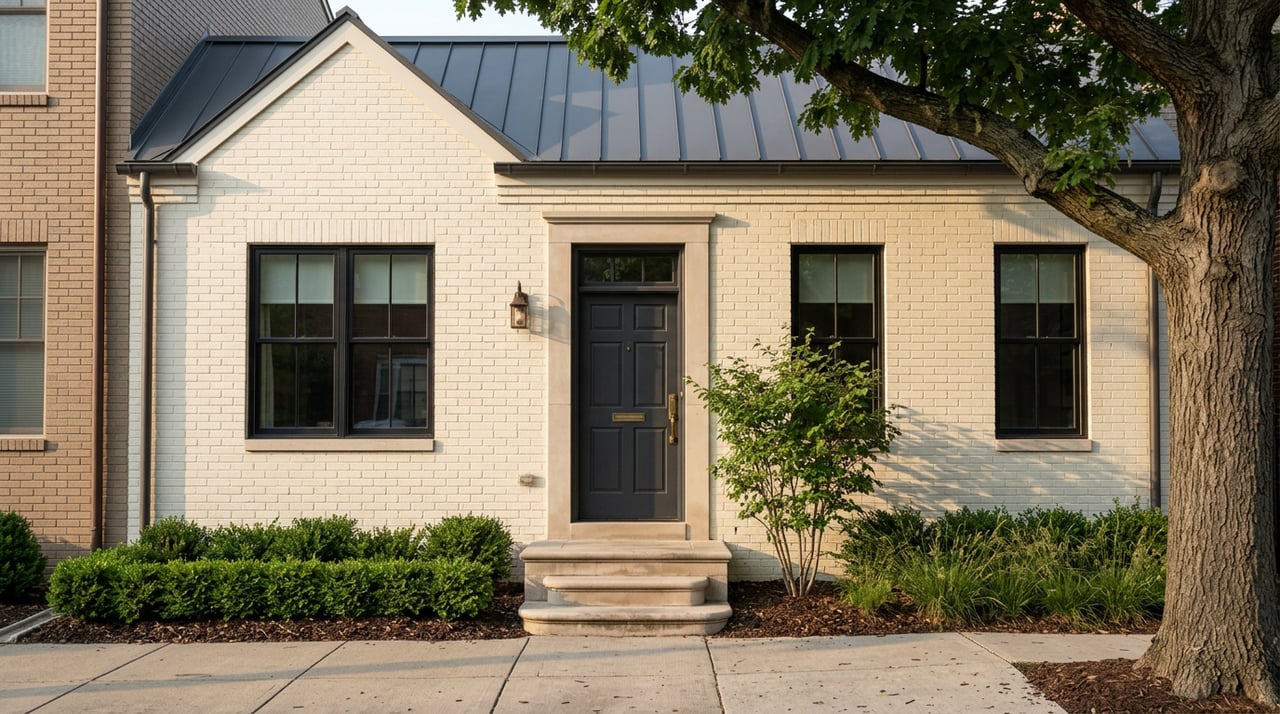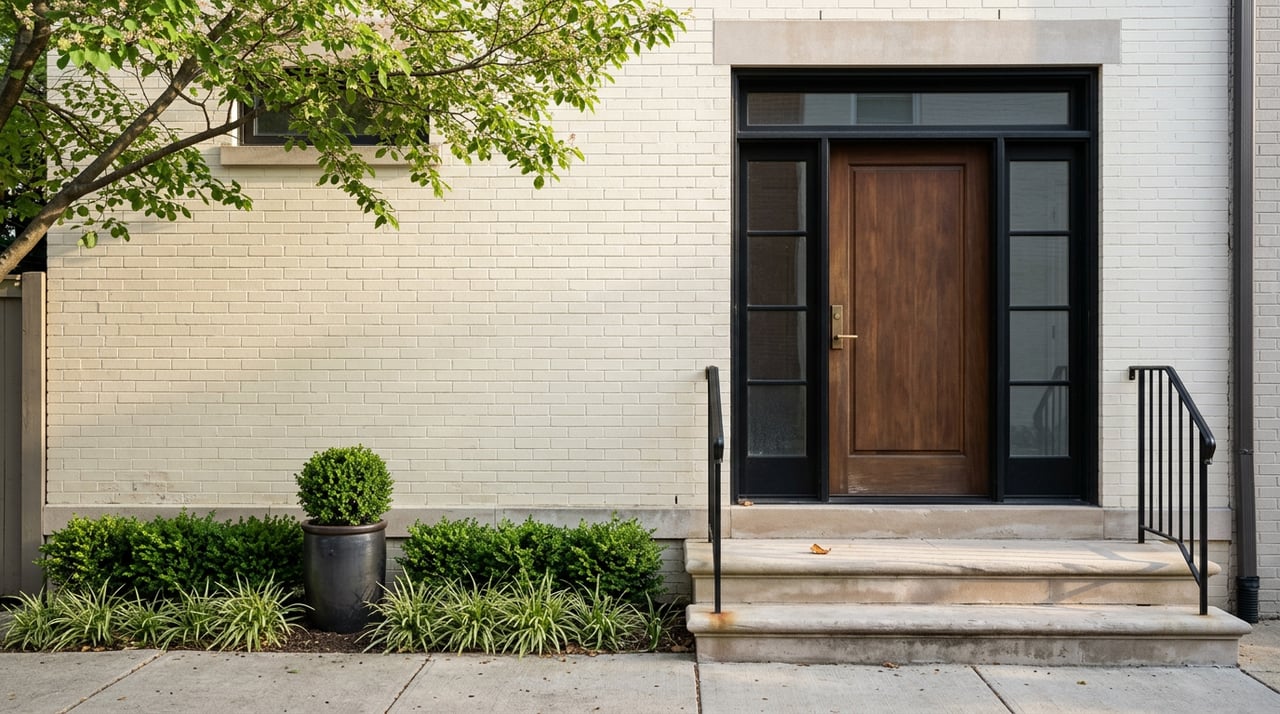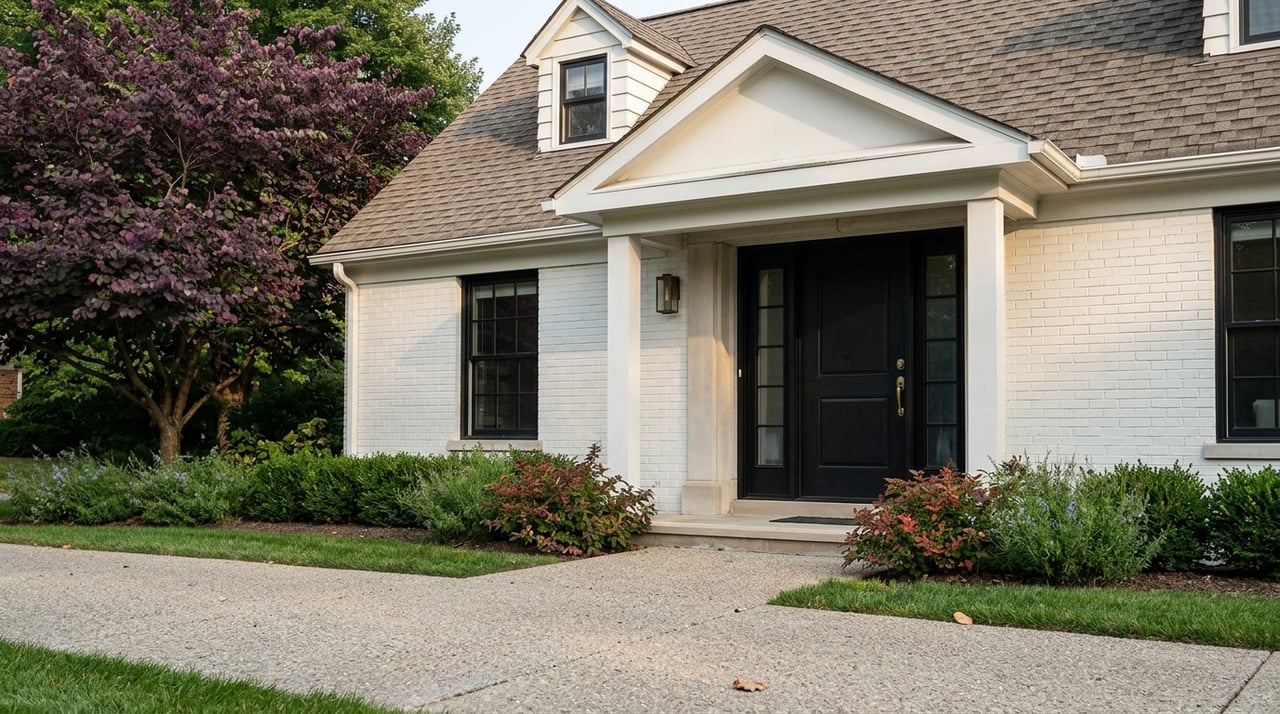
Two buyers walk into Wheaton with the same $475,000 pre-approval letter. One ends up in a 1978 raised ranch in Briarcliffe with a monthly HOA fee and original mechanicals to plan around. The other ends up nowhere close, priced out of a walk-to-Metra Victorian by $200,000 or more, watching a Cantigny-adjacent estate sell for triple their budget. Same city. Same school district lines, more or less. Two completely different products.
That gap is the story the citywide median doesn't tell. Wheaton's market gets reported as a single number, but it behaves like at least three separate markets stitched together, and knowing which one you're actually shopping in changes almost everything about how you search.
The number that gets repeated
In May 2026, the median sold price across Wheaton came in at $566,000, up about 10% from the month before, with homes selling at roughly 103.5% of list price and a median of just 5 days on market. Earlier in the spring, March 2026 put the median sold price at $437,500 with homes taking closer to 19 days to sell. Trailing twelve-month figures put the median closer to $479,000, up about 8% year over year, with average time on market around 14 days against a national average closer to 54.
None of those numbers are wrong. They're just measuring a moving target, because that same trailing twelve-month window includes homes near Cantigny Park, the 500-acre estate and golf property on Wheaton's southwest side, where Victorian-era homes on the National Register of Historic Places routinely sell for $950,000 to $1.8 million, running alongside 1970s subdivision homes changing hands well under $500,000. Average those together and you get a median that describes neither.
Same city, three different housing eras
The clearest way to see it is by housing stock, not zip code. Wheaton's neighborhoods weren't built in one wave. They were built in distinct decades, and that construction era, more than any other single factor, predicts how a home behaves on the market.
Submarket | Built | What defines it | Price behavior |
|---|---|---|---|
Briarcliffe / Briarcliffe West | 1970 to 1985 | Single-family and townhome mix, HOA fees roughly $212 to $491 per month, sizes from about 1,050 to over 4,100 square feet | Entry to mid-range, competitively priced, steady turnover |
North Wheaton subdivisions (Wheaton Ridge, Wheaton Crossing) | Mostly 1980s to 1990s, some newer infill | Established, consistent lot layouts, quieter residential streets | Mid-range family pricing, strong repeat demand |
Historic downtown core | Pre-1950s, Victorian and Cape Cod styles | Walkable to Metra, downtown restaurants, and the Wheaton Grand Theater | Premium for walkability, smaller footprints |
Cantigny-adjacent estate tier | Historic to custom-built | Backs to golf courses and the Cantigny estate grounds | $950,000 to $1.8 million, a different buyer pool entirely |
A home doesn't have to be in a different town to sell for four times as much as one ten minutes away. It just has to sit in a different one of these tiers.
Why school district lines don't explain the gap
The instinct is to assume price differences track school assignments. In Wheaton, that instinct mostly breaks down. Most of the city falls under Community Unit School District 200, and a $475,000 townhome and a $1.5 million estate can share the same district boundary. The variance is coming from somewhere else: home age, lot size, distance to a walkable downtown, and proximity to a specific amenity like Cantigny or the Illinois Prairie Path. A buyer comparing two Wheaton listings on price alone, without accounting for which era and which pocket they're in, is comparing two different products as if they were interchangeable.
That also means the market's average pace, that 5-day median days on market reported in April and May 2026, is doing some averaging of its own. A market blending an entry tier that moves in days with an estate tier that can sit for months will report a pace that no individual price band actually matches on its own.
What's arriving downtown right now
The downtown submarket in particular is in the middle of a visible shift. Banner Real Estate Group broke ground in mid-2025 on The Faywell, a 334-unit apartment development on the south side of the Metra tracks that will include ground-floor space for Egg Harbor Cafe, a longtime Wheaton brunch spot, and construction has continued into 2026. Ron DeVries, senior managing director of Integra Realty Resources, connected that kind of project to a broader pattern in the suburbs, telling the Daily Herald that renters are staying in apartments longer instead of moving on to homeownership, describing "the natural flow of new people coming in and less people walking out the door for home ownership."
That matters for anyone shopping the entry tier. If more would-be Briarcliffe or North Wheaton buyers are staying in downtown rentals a year or two longer than they used to, that's fewer buyers converting into the starter-home pool at exactly the moment that tier is already moving in single-digit days with multiple-offer pricing.
Downtown is picking up other momentum too. The Downtown Wheaton Association was awarded a $30,000 tourism marketing grant from the Illinois Department of Commerce and Economic Opportunity in February 2026, aimed at extending the reach of downtown's dining, shopping, and event calendar beyond the local market, according to Shaw Local. Meanwhile on Roosevelt Road, a corridor the city has been actively studying for redevelopment, a developer sought approval this spring for a roughly 24,000-square-foot grocery store and nursery school on a site that had sat vacant since a car dealership and repair shop were demolished there in 2023. Two different submarkets, two different kinds of investment, moving on two different timelines.
Where this leaves a buyer comparing Wheaton to Glen Ellyn
Buyers cross-shopping Wheaton often put it next to Glen Ellyn, and the comparison sharpens the point. Glen Ellyn's downtown is more compact and more walkable, and its median price runs higher, closer to $600,000. Wheaton's tradeoff is breadth: a wider price range and a larger pool of inventory across its different eras, which means more room to find a specific combination of budget and lifestyle, but also more room to end up shopping the wrong tier without realizing it.
What to check before you write an offer
The era-based split has practical consequences at the inspection table, not just the search stage.
- In homes built before the mid-1980s, ask when major mechanicals (HVAC, water heater, electrical panel) were last replaced. Original systems in this age range are common enough to plan around.
- If a listing sits near Cantigny or backs to the Prairie Path, confirm whether the premium reflects the lot itself or genuine updates inside the home. Location premiums and renovation premiums are easy to conflate.
- Ask your agent which submarket a listing actually falls into, not just its list price. A $475,000 home in Briarcliffe and a $475,000 home two blocks from downtown are not competing for the same buyer.
- If you're weighing a fast-moving entry-tier listing, factor in that the citywide 5-day pace is an average. Your specific price band may move faster or slower than that number suggests.
Common questions about Wheaton's 2026 market
Is Wheaton currently a buyer's or seller's market? Every measure from the first half of 2026, months of supply under 1.5, sold-to-list ratios above 100%, and days on market in the single digits by spring, points to a seller's market, particularly at the entry and mid-price tiers.
Does the Faywell apartment project mean rents are replacing home sales in Wheaton? Not exactly. It signals strong demand for downtown rental living, which analysts have tied to renters delaying the move into homeownership. That's a demand-timing shift, not a sign that the sales market itself is weakening.
Why do some Wheaton homes sell for four times the median? Because the median blends housing stock from different construction eras and locations, from 1970s subdivisions to century-old estates near Cantigny Park, into a single number. The spread is the point, not an anomaly.
Wheaton rewards buyers and sellers who understand which of its markets they're actually in, and that kind of read only comes from tracking the city closely, era by era and block by block. If you're weighing a move into Wheaton, or preparing a home there for sale in a market where preparation and pricing strategy still separate a fast sale from a stalled one, the Lisa Wolf Team | wolfpartners GROUP can walk you through exactly where your home or your search fits. Work With Us to get a read on your specific corner of Wheaton before you commit to a number that might not describe it.